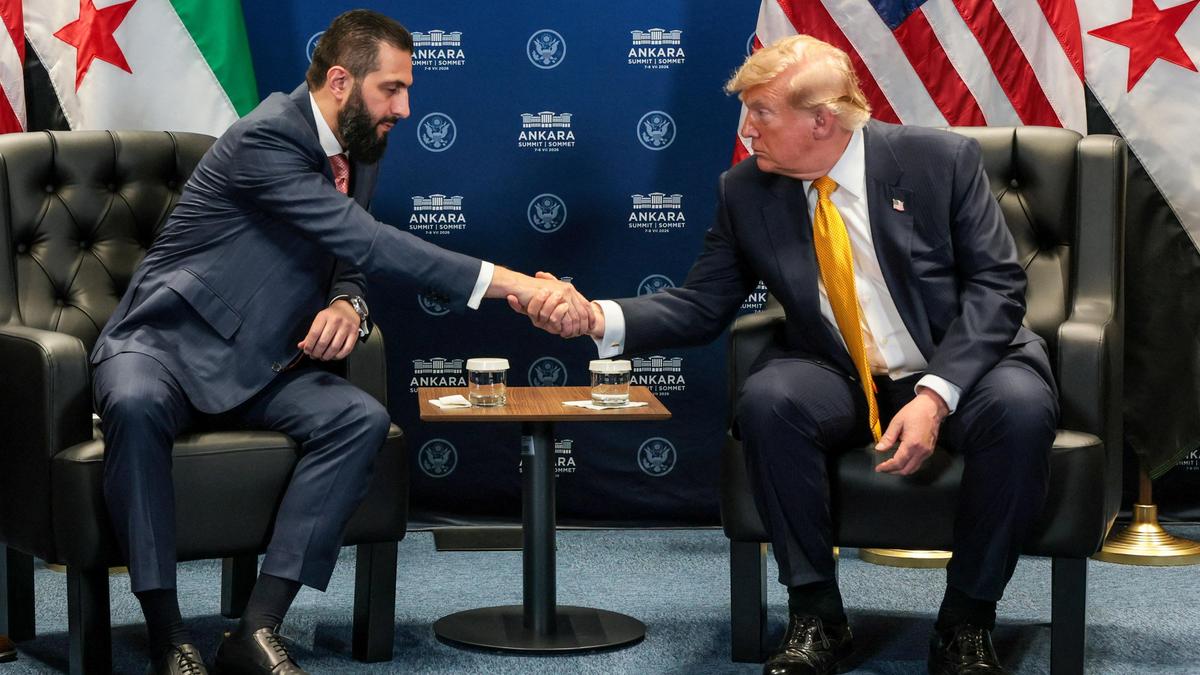
The United States has announced its decision to remove Syria from its list of state sponsors of terrorism, a designation that has been in place for decades. This move is seen as a significant vote of confidence in the country’s leader, Ahmed al-Sharaa, who has been working to rebuild and unify the war-torn nation.
Historic Step
Secretary of State Marco Rubio informed Congress of the decision, which will take effect in 45 days unless lawmakers intervene. The move is part of a broader effort by the US to support Syria’s reconstruction and economic development, and is seen as a key step towards unlocking international trade and investment in the country.
Regional Implications
The decision has significant implications for the region, particularly for Israel, which has long been a critic of Syria’s support for militant groups. However, despite these concerns, the US has chosen to move forward with the delisting, citing the need for a stable and unified Syria that can contribute to regional peace and security.
- The US decision is seen as a major boost to Sharaa’s leadership, who has been working to recast himself as a unifying figure after the fall of the Assad regime.
- The move is expected to unlock significant economic support for Syria, which is seeking to rebuild after years of brutal war.
- The delisting decision comes after formal assurances from Sharaa that Syria will not support acts of international terrorism in the future.
Only three countries remain on the US terror blacklist: Iran, North Korea, and Cuba. The removal of Syria from the list is seen as a significant development in the country’s efforts to reintegrate into the international community.
The US had listed Syria as a state sponsor of terrorism since 1979, citing its support for Palestinian militant groups and alleged involvement in incidents such as the 1986 attempted bombing of an Israeli airline. However, with the removal of this designation, Syria is now poised to embark on a new chapter in its history, one that is marked by cooperation and collaboration with the international community.
Source: Original Article
About the Author