Protest Erupts at NLSIU Campus Over Water Shortage and Hostel Overcrowding
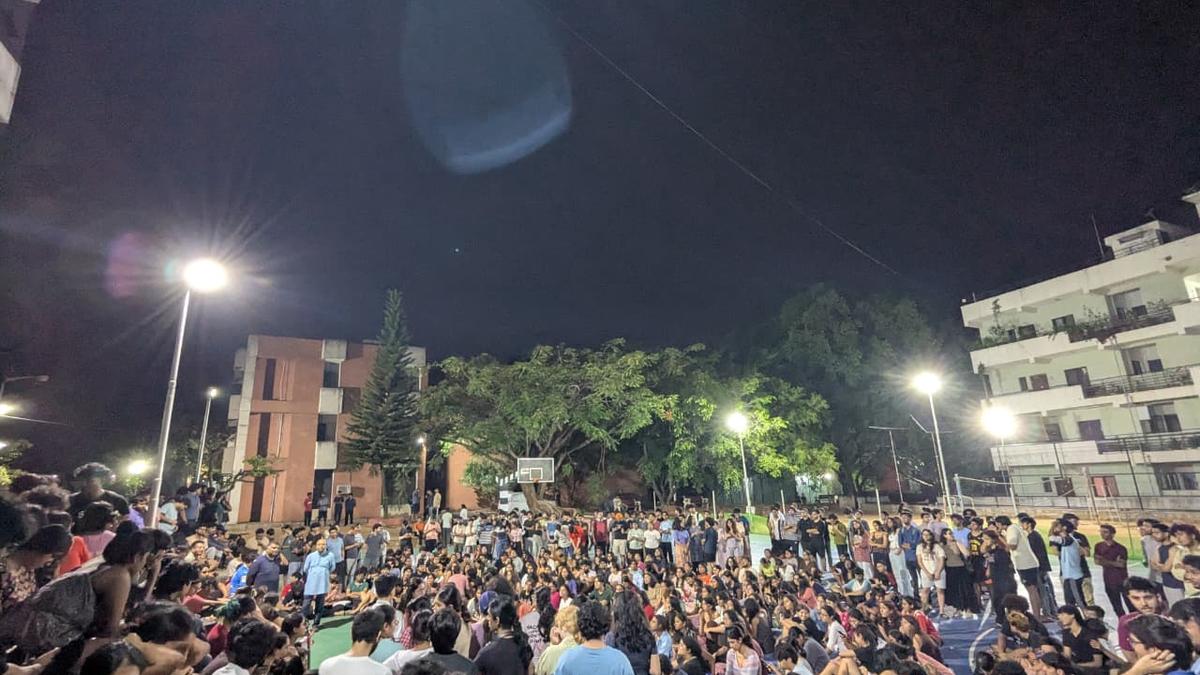
Students at the National Law School of India University (NLSIU) in Bengaluru took to the streets on May 12 night to protest against the university’s alleged neglect of their basic needs. The protest, which began around 10 p.m., was sparked by months of unaddressed complaints over water shortage, power cuts, and overcrowding in hostels.
Water Shortage and Unclean Conditions
Students complained of irregular water supply in hostels, with taps and flushes often stopping abruptly. They also reported instances of unclean water supply, making it difficult for them to access basic hygiene facilities. The problem is exacerbated during summer, especially in crowded hostel rooms.
Furthermore, students alleged that women’s hostels are severely overcrowded, with 93 students sharing limited facilities. In some hostel blocks, 36 women are forced to share just three toilets, raising serious concerns about health and safety.
Safety Concerns and Inadequate Infrastructure
Students also highlighted safety concerns over ongoing construction on campus, which they claim is being carried out without adequate safeguards. They cited a recent incident in which heavy cement slabs fell in a commonly used area, and another incident in which a lift in one of the men’s hostels fell from the second floor to the basement. Two students were in the lift at the time of the incident.
Despite paying annual fees ranging from ₹4.5 lakh to ₹5 lakh, with over ₹1.2 lakh going towards hostel accommodation, students feel that the university is failing to provide basic facilities. The protest is not just about inconvenience, but about dignity and basic living conditions, students said.
- Irregular water supply in hostels
- Unclean water supply and inadequate hygiene facilities
- Overcrowding in women’s hostels
- Safety concerns over ongoing construction on campus
- Inadequate infrastructure and neglect of student needs
University authorities were not available for comment, leaving students feeling frustrated and neglected. The students’ demands for basic facilities and dignity remain unaddressed, and it remains to be seen how the university will respond to their concerns.
Source: Original Article
About the Author