The Ongoing Dispute
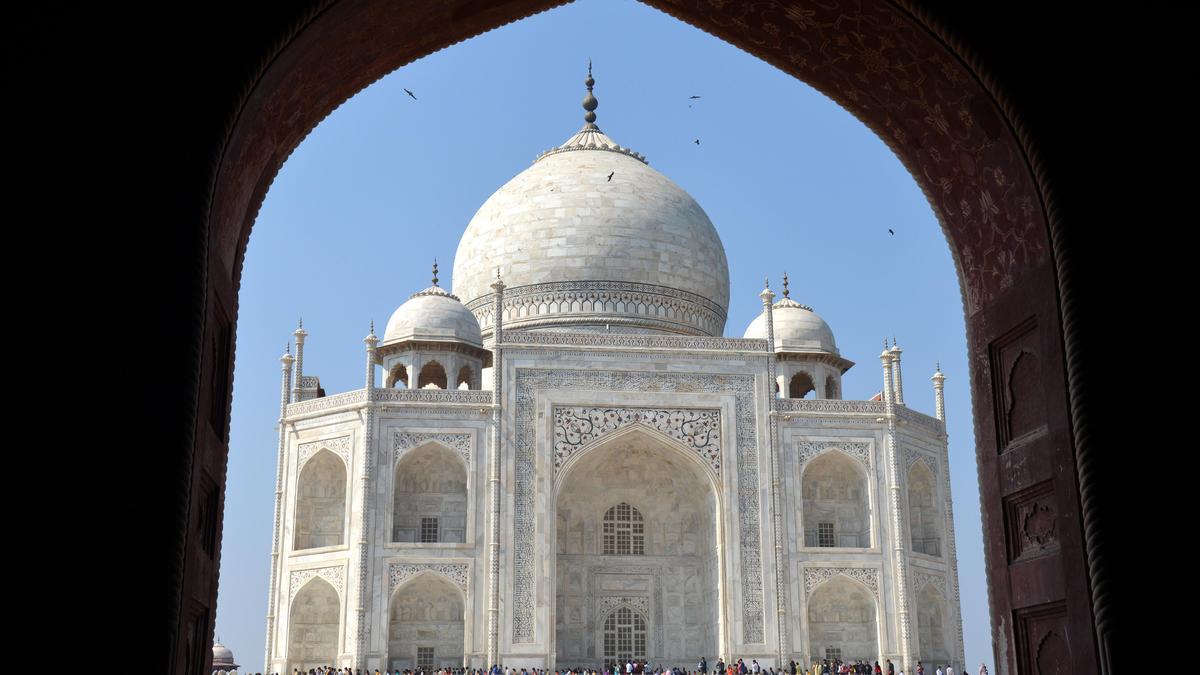
The Taj Mahal, a UNESCO World Heritage site and one of India’s most iconic landmarks, has once again found itself at the center of a heated debate. The Allahabad High Court has recently issued notices to the Central Government and the Archaeological Survey of India, seeking their response to a plea that challenges a lower court’s order refusing a survey of the monument.
The Plea and Its Implications
A petition filed by advocate Harishankar Jain claims that the Taj Mahal is, in fact, a Hindu temple known as Tejo Mahalaya, and seeks permission for Hindus to offer prayers at the site. The petitioners have also requested the appointment of an Advocate Commissioner to inspect the monument and conduct photography and videography.
The controversy surrounding the Taj Mahal’s origins is not new. Over the years, various claims have been made about the monument’s design and construction, including assertions that it was built on the site of a Rajput palace or a Hindu temple. However, historians and experts have consistently rejected these claims, citing a lack of evidence and credibility.
A History of Claims and Counterclaims
- In the 17th century, it was claimed that the Taj Mahal’s architect was Venetian Geronimo Veroneo, a jeweller by profession.
- In the mid-19th century, a Frenchman named Austin de Bordeaux was credited with designing the monument, despite having died in 1632, the year construction on the Taj Mahal began.
- In 1965, P.N. Oak, a non-historian, claimed that the Taj Mahal was originally a Rajput palace built in the 4th century, and later revised his claim to assert that it was a Hindu temple built in the 12th century.
These claims have been consistently rejected by historians and experts, including the Archaeological Survey of India, which has stated that the Taj Mahal is a 17th-century tomb built by Mughal emperor Shah Jahan.
The Current Status
The recent notice issued by the Allahabad High Court has brought the controversy back into the spotlight, with the Central Government and the Archaeological Survey of India being asked to respond to the plea. As the matter continues to unfold, it remains to be seen how the courts will ultimately rule on the issue.
Source: Original Article
About the Author